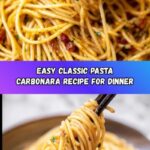
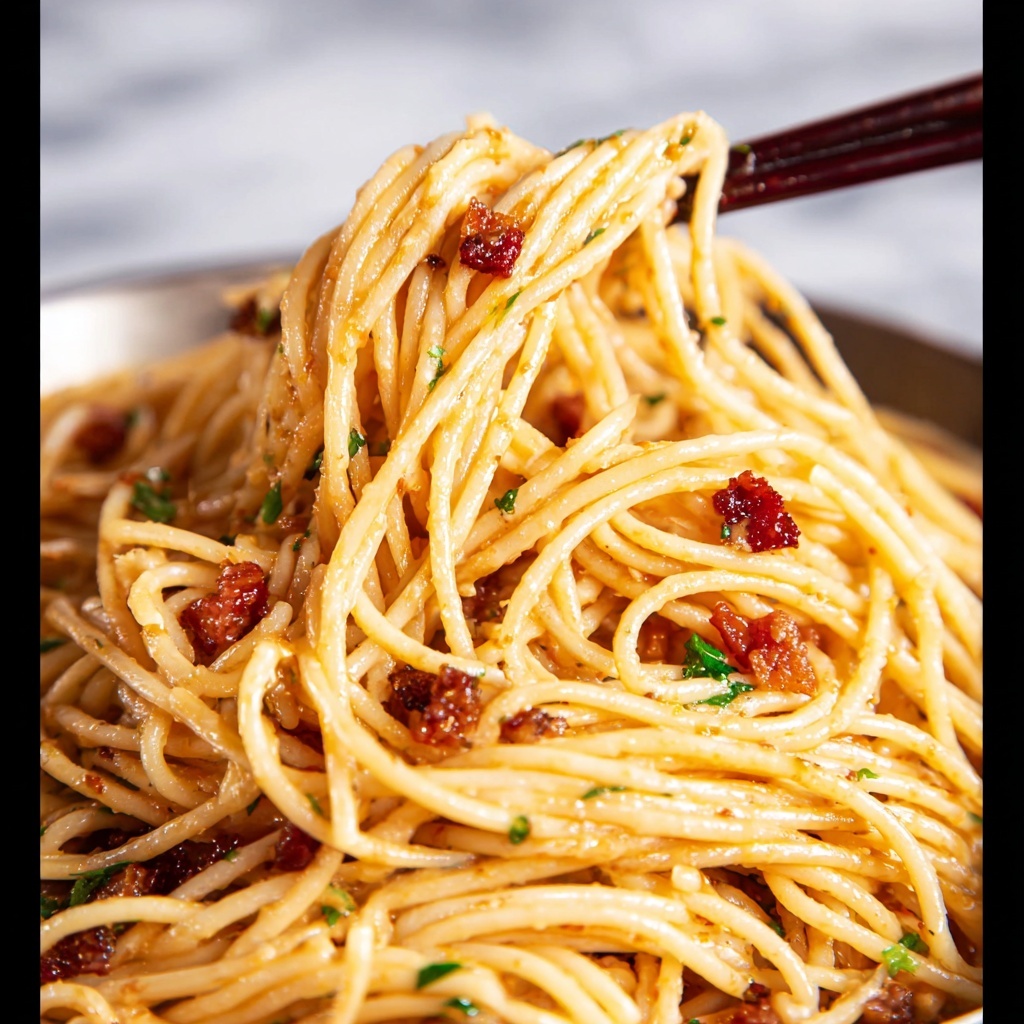
If you are craving a classic Italian delight that combines creamy textures, savory pork, and perfectly cooked pasta, this Pasta Carbonara Recipe is going to be your new best friend in the kitchen. It’s an effortless dish that feels luxurious, with its silky sauce made from eggs and cheese, crispy cured pork adding a delightful bite, and a peppery finish that brings everything together. Whether you’re cooking for a weeknight dinner or impressing guests with authentic flavors, this Pasta Carbonara Recipe is sure to warm hearts and satisfy appetites with every tender, flavorful bite.
Ingredients You’ll Need
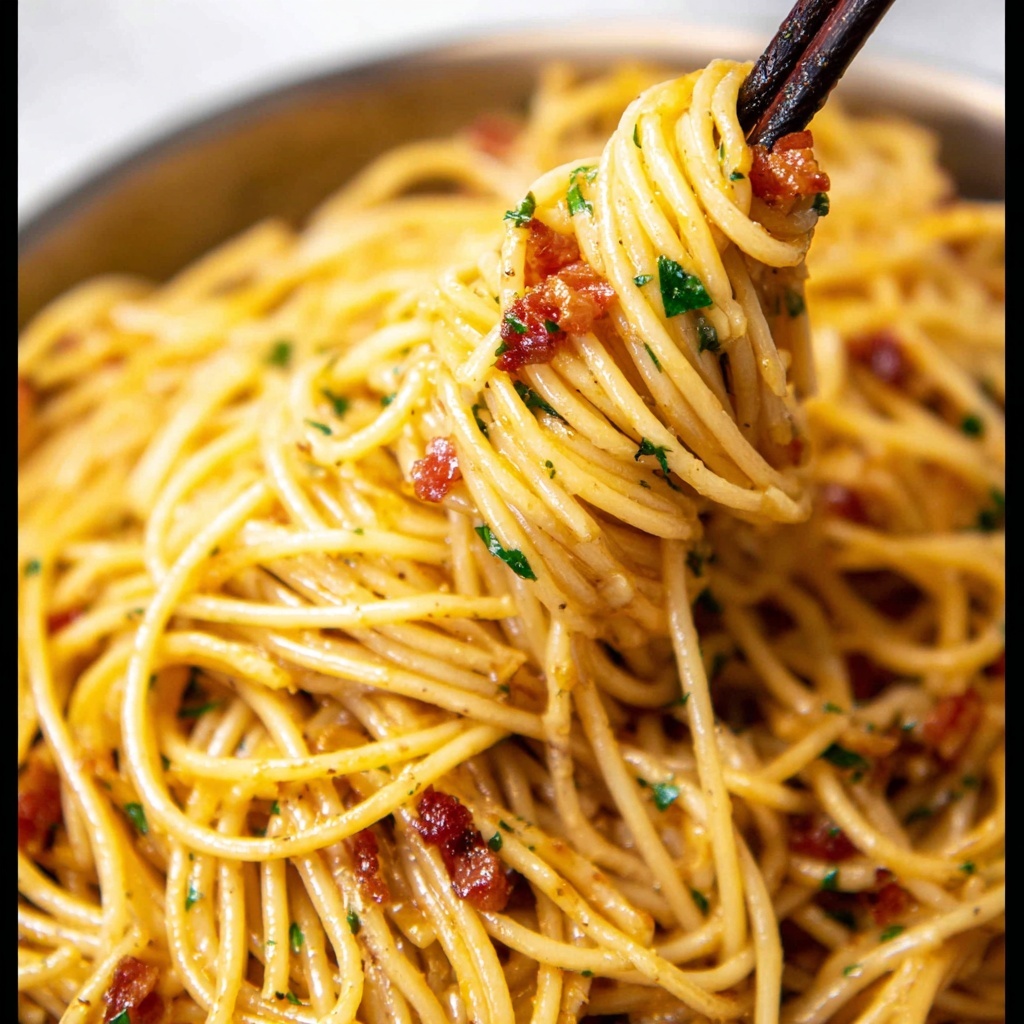
The beauty of this Pasta Carbonara Recipe lies in its simplicity, where each ingredient plays a vital role in creating the perfect harmony of taste and texture. From the pasta providing the satisfying base, the cured pork infusing smoky goodness, to the eggs and cheese that meld into a creamy sauce that clings perfectly to every strand, these ingredients are straightforward but absolutely essential.
- 1 pound spaghetti: The traditional pasta shape for carbonara, perfect for holding onto the luscious sauce.
- 1 tablespoon salt: Used to season the boiling water, ensuring the pasta is flavorful from within.
- 3 large eggs: These create the rich and silky sauce; you can use whole eggs or just yolks for extra creaminess.
- 1 cup grated cheese (Parmesan or Pecorino Romano or a mix): Adds sharp, tangy depth and helps thicken the sauce beautifully.
- 2 tablespoons chopped parsley (optional): A fresh pop of color and brightness that balances the richness.
- Ground black pepper: Essential for adding that spicy kick that defines classic carbonara.
- ½ cup pasta cooking water: The starchy water helps transform the egg and cheese mixture into a creamy sauce.
- 1 tablespoon olive oil: Used to crisp up the cured pork for that irresistible texture and flavor.
- 8 oz cured pork (Guanciale or pancetta recommended, or thick bacon): The star ingredient that gives carbonara its iconic smoky, savory edge.
How to Make Pasta Carbonara Recipe
Step 1: Cook the Pasta
Start by bringing a large pot of water to a rolling boil and seasoning it generously with salt. The salty water ensures the spaghetti is perfectly seasoned inside and out. Add the spaghetti and cook until al dente, meaning just tender but still slightly firm to the bite. This is the foundation of a great carbonara, so don’t overcook it!
Step 2: Prepare the Cheese and Egg Sauce
While the pasta cooks, whisk together the eggs, grated cheese, chopped parsley if using, and a generous amount of ground black pepper. The cheese adds a beautifully tangy richness that perfectly complements the eggs, and the pepper brings that signature zing. Now, very slowly drizzle in ½ cup of the hot pasta cooking water while whisking continuously. This step is crucial because the hot water tempers the eggs and starts to create that silky sauce without scrambling them.
Step 3: Crisp Up the Cured Pork
Heat olive oil in a large, deep skillet over medium-high heat, then add your cured pork — Guanciale is traditional, but pancetta or thick bacon will also shine here. Cook the pork until it’s beautifully crispy and has rendered its fat, infusing the dish with smoky, porky goodness that’s absolutely irresistible.
Step 4: Combine and Finish the Dish
Drain the pasta and add it directly to the skillet with the crisped pork, tossing well to coat it in that flavorful fat. Remove the pan from heat to prevent scrambling, then slowly add the egg and cheese mixture while continuously tossing. The residual heat will gently cook the sauce, coating every strand of spaghetti in a glossy, creamy finish. Serve immediately to enjoy its fresh-from-the-pan magic.
How to Serve Pasta Carbonara Recipe
Garnishes
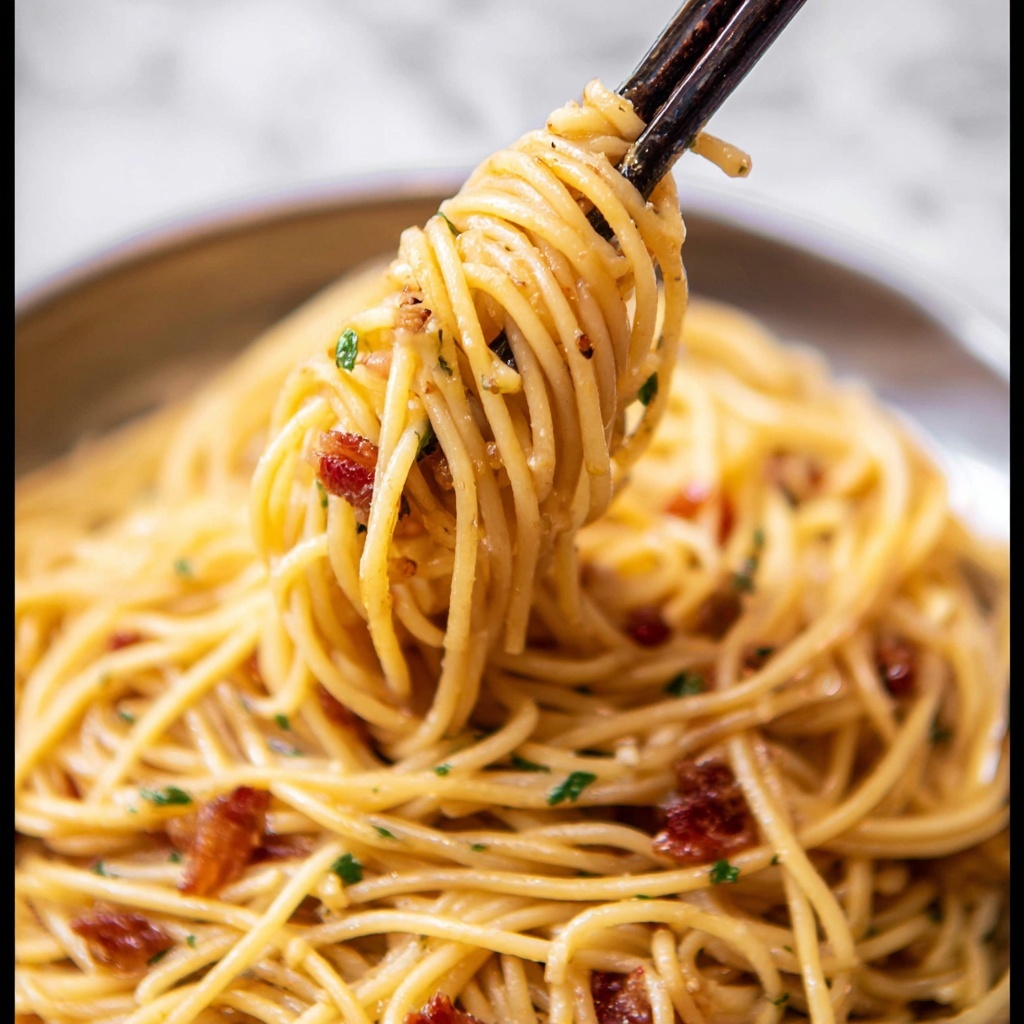
While carbonara is perfect on its own, adding a sprinkle of extra grated cheese or a bit more freshly cracked black pepper on top can elevate the experience. A few fresh parsley leaves lend a lovely color contrast and burst of freshness that lightens the plate visually and palate-wise.
Side Dishes
To round out your meal, serve this Pasta Carbonara Recipe with a crisp green salad dressed lightly with lemon and olive oil to cut through the richness. Garlic bread or a warm crusty baguette is another great choice, perfect for mopping up every last drop of that luscious sauce.
Creative Ways to Present
Consider serving carbonara in a shallow white bowl to showcase the glossy sauce and vibrant colors. You can also nestle a poached egg on top for a luxurious twist or scatter some toasted pine nuts for crunch. When entertaining, present it family-style in a large serving platter for a cozy, communal feel.
Make Ahead and Storage
Storing Leftovers
If you have leftovers, transfer the carbonara to an airtight container and refrigerate for up to two days. Since the sauce is egg-based, it’s best eaten fresh, but careful storage can still yield a delicious next-day meal.
Freezing
Freezing this Pasta Carbonara Recipe is generally not recommended because the creamy sauce can separate and change texture upon thawing. Instead, enjoy it fresh or save leftovers for refrigeration only.
Reheating
To reheat, gently warm the pasta in a skillet over low heat with a splash of water or cream to revive the sauce’s creaminess. Avoid microwaving if possible, as it can cause the eggs to curdle and the texture to become grainy.
FAQs
Can I use bacon instead of pancetta or guanciale in this Pasta Carbonara Recipe?
Absolutely! Thick-cut bacon is a convenient and tasty alternative that still delivers smoky flavor, though pancetta or guanciale are traditional choices for a more authentic taste.
Is it necessary to use the pasta cooking water in the sauce?
Yes, the starchy pasta water is a magic ingredient that helps emulsify the sauce, making it creamy and allowing it to coat the pasta evenly without scrambling the eggs.
Can I make carbonara without eggs?
Traditional Pasta Carbonara Recipe depends on eggs for its signature creamy texture, so omitting them changes the dish significantly. If you need an egg-free option, consider other creamy pasta sauces like Alfredo or a vegan-style sauce.
Why should I remove the skillet from heat before adding the egg mixture?
Removing the skillet prevents the eggs from cooking too quickly and scrambling, helping to create that silken sauce, not scrambled eggs.
What type of cheese is best for this Pasta Carbonara Recipe?
Parmesan or Pecorino Romano work beautifully—Parmesan offers a milder, nutty flavor, while Pecorino adds a sharper, saltier bite. Mixing the two can give you the best of both worlds.
Final Thoughts
This Pasta Carbonara Recipe is a heartfelt celebration of simple ingredients coming together to create something truly comforting and special. Its ease and elegance make it perfect for both weeknight dinners and special occasions. Give this recipe a try, and you’ll soon discover why this classic is a beloved staple in so many kitchens.
Print
Pasta Carbonara Recipe
- Prep Time: 5 minutes
- Cook Time: 15 minutes
- Total Time: 20 minutes
- Yield: 5 to 6 servings
- Category: Main Course
- Method: Stovetop
- Cuisine: Italian
Description
A classic Italian Pasta Carbonara recipe featuring al dente spaghetti tossed with a silky sauce made from eggs, Parmesan cheese, and crispy cured pork like guanciale or pancetta, finished with a touch of black pepper and optional parsley for freshness.
Ingredients
Pasta
- 1 pound spaghetti
- 1 tablespoon salt
Sauce
- 3 large eggs
- 1 cup grated cheese (Parmesan OR Pecorino Romano OR a mix)
- 2 tablespoons chopped parsley (optional)
- ground black pepper, to taste
- ½ cup pasta cooking water
Meat and Cooking
- 1 tablespoon olive oil
- 8 oz cured pork (diced or in batons; guanciale OR pancetta are best; thick bacon is an easy substitute)
Instructions
- Cook pasta: Bring a large pot of water to a rolling boil and season it with 1 tablespoon of salt. Add the spaghetti and cook according to package directions until al dente, usually about 8–10 minutes.
- Prepare cheese sauce: While the pasta cooks, whisk together the eggs, grated cheese, chopped parsley (if using), and ground black pepper in a mixing bowl. Carefully ladle ½ cup of hot pasta cooking water from the boiling pot into the egg mixture slowly while whisking continuously to temper the eggs and create a smooth sauce. Set aside.
- Cook bacon: Heat 1 tablespoon of olive oil in a large, deep skillet or sauté pan over medium-high heat. Add the diced or baton-cut cured pork (guanciale, pancetta, or bacon) and cook until the meat is crispy and golden, rendering the fat, about 5–7 minutes.
- Finish dish: Drain the cooked pasta and add it directly to the skillet with the crispy cured pork, tossing well to coat in the rendered fat. Remove the pan from the heat to avoid scrambling the eggs. While continuously tossing, gradually add the egg and cheese mixture to the pasta, using the residual heat to create a silky, creamy sauce that clings to the noodles. Serve immediately, optionally garnished with extra cheese and pepper.
Notes
- For a richer sauce, you can use only the egg yolks instead of whole eggs.
- Parmesan and Pecorino Romano cheeses can be used separately or mixed, depending on preference.
- Guanciale or pancetta provides authentic flavor, but thick-cut bacon is a suitable substitute.
- Be sure to temper the eggs with pasta water to prevent scrambling and achieve a smooth sauce.
- This dish should be served immediately to enjoy the sauce at its best texture.