Description
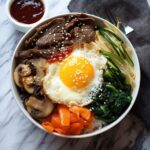
Bibimbap is a classic Korean dish featuring a vibrant mix of cooked rice topped with assorted sautéed vegetables, marinated beef, and a perfectly fried egg. Served with a spicy and savory gochujang sauce, this recipe offers a harmonious balance of flavors and textures that is both comforting and nutritious. Ideal for a satisfying family meal, this bibimbap recipe includes detailed preparation of each component, making it approachable for cooks of all levels.
Ingredients
Scale
Rice and Egg
- 4 cups cooked white rice, preferably short grain
- 4 eggs
- 2 tsp toasted sesame seeds
Beef Marinade and Meat
- 250 g (8 oz) beef tenderloin or thick steak, very finely sliced
- 1/4 green apple, grated using box grater
- 3 garlic cloves, minced
- 1 tbsp light or all-purpose soy sauce
- 1 tbsp honey or brown sugar
- 2 tsp toasted sesame oil
Vegetables
- 2 large carrots, cut into 5 x 0.5 cm (2 x 1/5 inch) batons
- 2 large zucchinis, cut into 5 x 0.5 cm (2 x 1/5 inch) batons
- 1 bunch spinach, cut into 5 cm (2 inch) lengths
- 8 large dried shiitake mushrooms
- 4 cups bean sprouts
Seasonings and Sauces for Vegetables
- 2 tsp minced garlic (about 3 cloves)
- 8 tsp vegetable oil, separated
- 1/2 tsp salt
- 1.5 tsp light or all-purpose soy sauce
- 1/4 tsp fish sauce (or substitute soy sauce)
- 1/4 tsp white sugar
- Toasted sesame oil for drizzling
Gochujang Sauce
- 4 tbsp gochujang paste
- 2 tbsp mirin
- 2 tbsp rice vinegar
- 1.5 tsp light or all-purpose soy sauce
- 3 tsp white sugar
- 1 garlic clove, finely grated
- 2.5 tsp toasted sesame oil
Instructions
- Soak and Prepare Mushrooms: Begin by soaking the dried shiitake mushrooms in warm water until they soften, approximately 20 minutes. Once rehydrated, drain and slice them thinly. This step ensures the mushrooms are tender and ready for cooking.
- Prepare Vegetables and Bean Sprouts: Wash and cut the carrots and zucchinis into batons as specified. Blanch the spinach in boiling water briefly until wilted, then drain and cut into 5 cm lengths. Similarly, blanch the bean sprouts in salted boiling water for about 1-2 minutes, then drain thoroughly. These steps create perfectly tender vegetables with vibrant color and texture.
- Cook Vegetables Separately: Heat vegetable oil in a skillet over medium heat. Stir-fry the carrot batons until just tender, then remove and set aside. Repeat the process for the zucchini batons, spinach, mushrooms, and bean sprouts, seasoning each with minced garlic, soy sauce, salt, fish sauce (or soy sauce substitute), and a pinch of sugar as you go. Drizzle lightly with toasted sesame oil for added flavor. Cooking the vegetables separately preserves their unique tastes and textures.
- Marinate and Cook Beef: In a bowl, combine the grated green apple, minced garlic, soy sauce, honey, and toasted sesame oil to create the marinade. Add the finely sliced beef and toss to coat thoroughly. Let it marinate for at least 15 minutes to absorb the flavors. Then, quickly stir-fry the beef in a hot pan with a bit of vegetable oil just until cooked through and browned, about 2-3 minutes. Avoid overcooking to keep the beef tender.
- Fry Eggs and Assemble Bibimbap: Fry the eggs sunny-side up in a lightly oiled pan until the whites are set but yolks remain runny. Warm the cooked rice if necessary. To serve, place a generous portion of rice in each bowl, arrange the cooked vegetables and marinated beef artfully on top, and crown with a fried egg. Garnish with toasted sesame seeds. Prepare the gochujang sauce by mixing the paste with mirin, rice vinegar, soy sauce, sugar, grated garlic, and toasted sesame oil, and serve alongside or drizzle over the dish to taste.
Notes
- Note 1: Short grain rice is preferred for its sticky texture that holds the toppings well.
- Note 2: If beef tenderloin is unavailable, another tender cut or sirloin can be used thinly sliced.
- Note 3: The grated green apple adds natural sweetness and tenderizes the beef.
- Note 4: Use light soy sauce for a less intense saltiness; all-purpose soy sauce is an acceptable substitute.
- Note 5: Dried shiitake mushrooms contribute deep umami flavor; soaking is essential for softness.
- Note 6: Gochujang paste is a Korean chili paste that adds heat and depth; available at Asian grocery stores.
- Note 7: Mirin is a sweet rice wine used for seasoning; can substitute with a small amount of sugar if unavailable.
- Note 8: Rice vinegar provides mild acidity that balances the sauce flavors.
- Note 9: Toasted sesame oil adds a fragrant nutty aroma and should be used sparingly to enhance dishes.