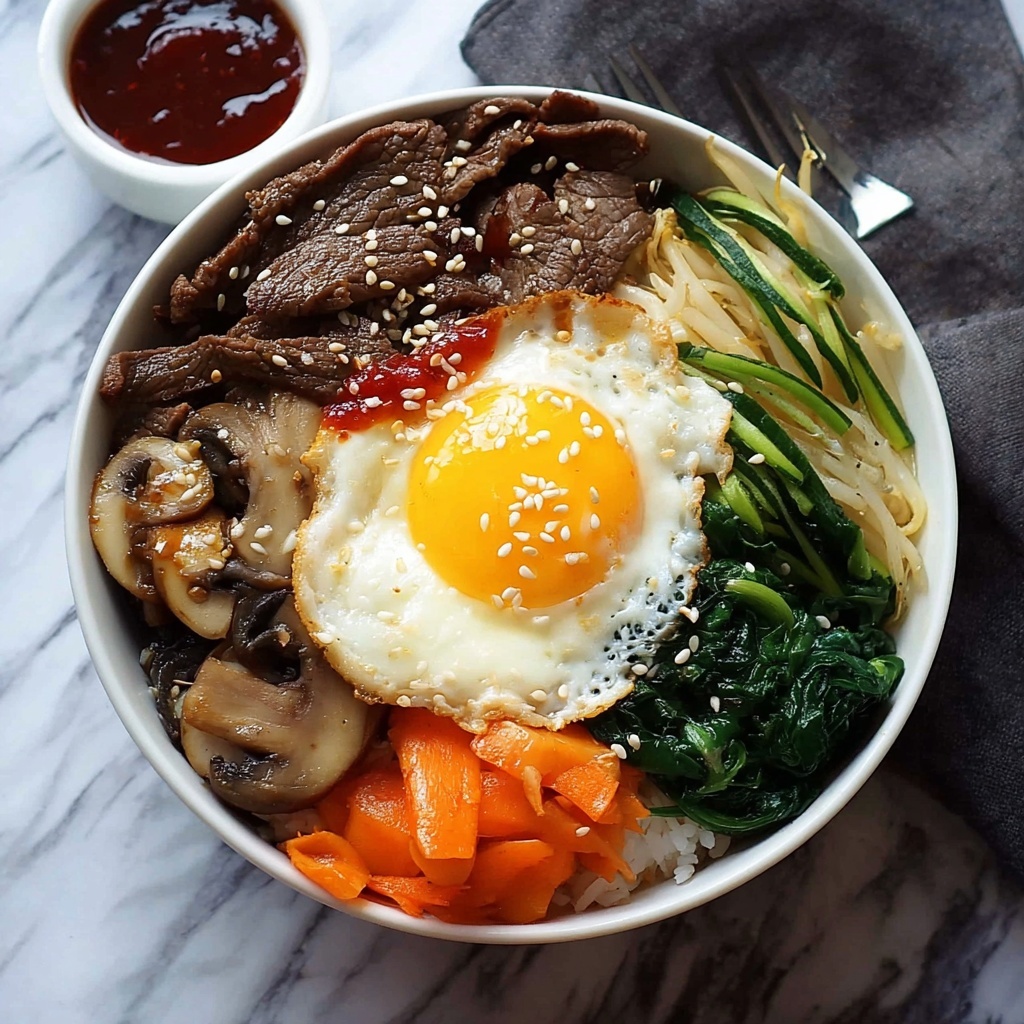
If you’ve ever wanted to dive into a dish that’s vibrant, flavorful, and just bursting with textures, the Bibimbap Recipe is absolutely the way to go. This Korean classic combines perfectly cooked rice with an array of fresh vegetables, tender beef, and that irresistible spicy-sweet gochujang sauce all topped with a sunny-side-up egg. The harmony of warm and cool ingredients, crunchy and soft bites, and bold flavors will have you craving this bowl again and again.
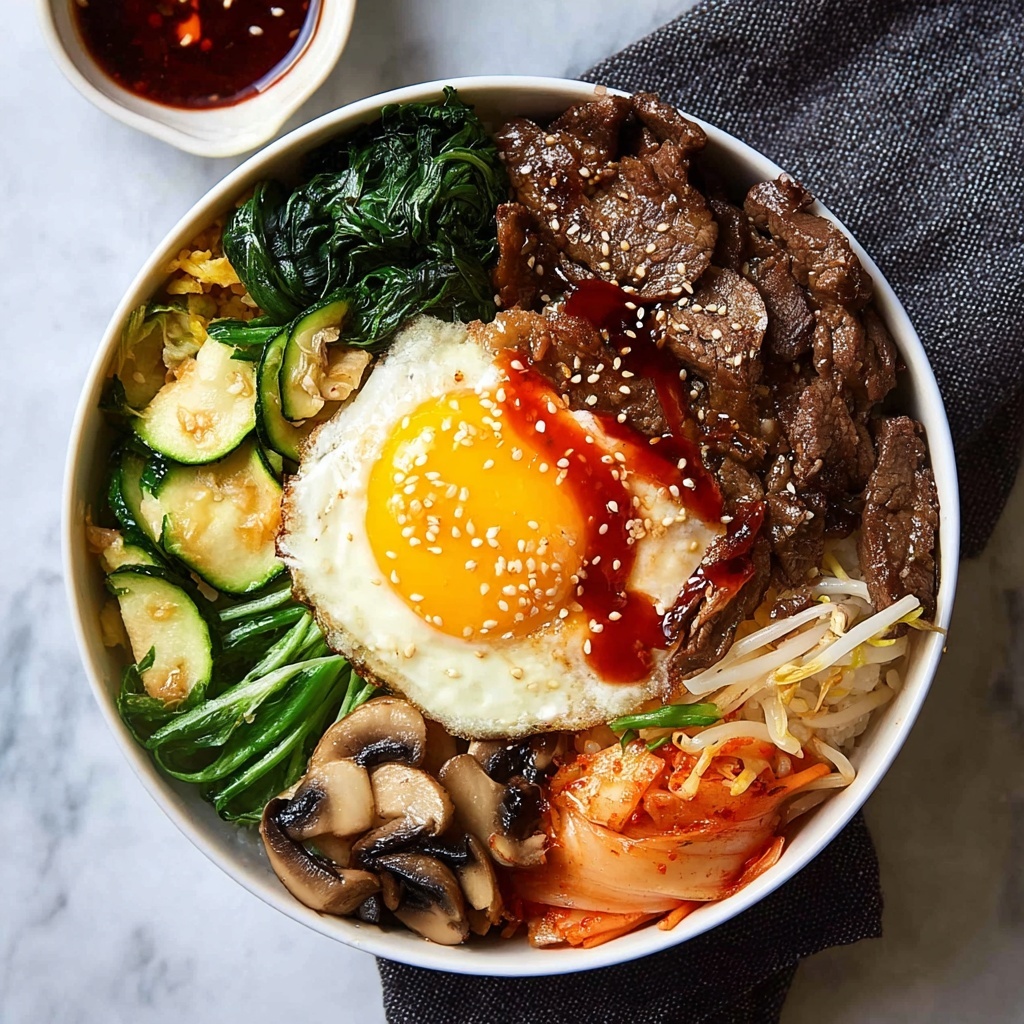
Ingredients You’ll Need
Gathering the essential ingredients for this Bibimbap Recipe is both simple and rewarding. Each component plays a starring role in creating that signature balance of taste, texture, and colorful appeal that’s so satisfying.
- 4 cups cooked white rice: Short grain rice is best for that sticky, fluffy base that keeps everything together.
- 4 eggs: Adds creaminess and richness when cooked sunny-side up for the perfect finishing touch.
- 2 tsp sesame seeds: Toast them lightly to add a nutty crunch and lovely aroma.
- 250 g/8oz beef tenderloin or thick steak: Very finely sliced for quick, tender cooking and perfect flavor absorption.
- 1/4 green apple: Grated to add a subtle sweetness and refreshing contrast to the savory ingredients.
- 3 garlic cloves, minced: Brings bold pungency needed to deepen the overall flavor.
- 1 tbsp soy sauce: Use light or all-purpose soy for that essential umami kick.
- 1 tbsp honey: Or brown sugar if you prefer, providing a gentle sweetness to balance the savory notes.
- 2 tsp toasted sesame oil: Adds a toasty, fragrant finish that beautifully ties all the flavors together.
- 2 large carrots: Cut into slender batons to introduce a fresh crunch and vibrant orange color.
- 2 large zucchini: Similarly cut, they offer a mild flavor and tender bite after sautéing.
- 1 bunch spinach: Cut into 5cm lengths to bring a touch of earthiness and color contrast.
- 8 dried shiitake mushrooms: Soaked and sliced, they add a deep, meaty umami dimension.
- 4 cups bean sprouts: A crisp, juicy pop of texture that balances the other cooked ingredients.
- 2 tsp minced garlic: Used again for seasoning the vegetables, doubling down on aromatic depth.
- 8 tsp vegetable oil: For sautéing each component separately to maintain distinct flavors and textures.
- 1/2 tsp salt: To enhance and round out all the flavors in the dish.
- 1.5 tsp soy sauce: Adds seasoning layers, especially to the vegetables and beef.
- 1/4 tsp fish sauce: Optional but recommended to punch up the savory notes; soy sauce can be used instead.
- 1/4 tsp white sugar: Balances any bitterness and harmonizes flavors.
- 4 tbsp gochujang paste: The fiery, savory Korean chili paste that brings bold heat and complexity.
- 2 tbsp mirin: A sweet rice wine that adds gentle sweetness and depth to the sauce.
- 2 tbsp rice vinegar: Brightens the sauce with a mild acidity that lifts the dish.
- 1.5 tsp soy sauce (for sauce): Integrates saltiness and umami into the gochujang blend.
- 3 tsp white sugar (for sauce): Balances spicy and salty with a subtle sweetness.
- 1 garlic clove, grated: Infuses the sauce with fresh, sharp garlicky flavor.
- 2.5 tsp toasted sesame oil (for sauce): Adds a final aromatic touch to the vibrant gochujang mix.
How to Make Bibimbap Recipe
Step 1: Prepare and Marinate the Beef
Start by finely slicing your tenderloin or steak, then marinate it with minced garlic, soy sauce, honey, and a touch of toasted sesame oil. This step infuses your beef with a sweet-savory flavor that cooks quickly and adds a juicy, tender bite to each spoonful.
Step 2: Soak and Slice Mushrooms
Soak the dried shiitake mushrooms until they soften, then slice thinly. Sauté them with a little garlic, soy sauce, and sesame oil. This step brings out their umami richness, giving your Bibimbap Recipe a deep earthy note that contrasts beautifully with the fresh veggies.
Step 3: Cook and Season Vegetables Separately
Sauté carrots, zucchini, spinach, and bean sprouts individually in vegetable oil with garlic, salt, and soy sauce. By cooking each vegetable on its own, you preserve their unique textures and flavors, ensuring every bite offers a delightful variety within the bowl.
Step 4: Fry the Eggs
Fry your eggs sunny-side up with just the right amount of runny yolk. These eggs crown the dish perfectly, adding richness and a silky texture that melts into the warm rice and veggies as you mix everything together.
Step 5: Prepare the Gochujang Sauce
Whisk gochujang paste with mirin, rice vinegar, soy sauce, sugar, grated garlic, and toasted sesame oil. This vibrant sauce is the soul of the Bibimbap Recipe, offering a spicy, tangy, and sweet punch that ties all the elements together beautifully.
How to Serve Bibimbap Recipe
Garnishes
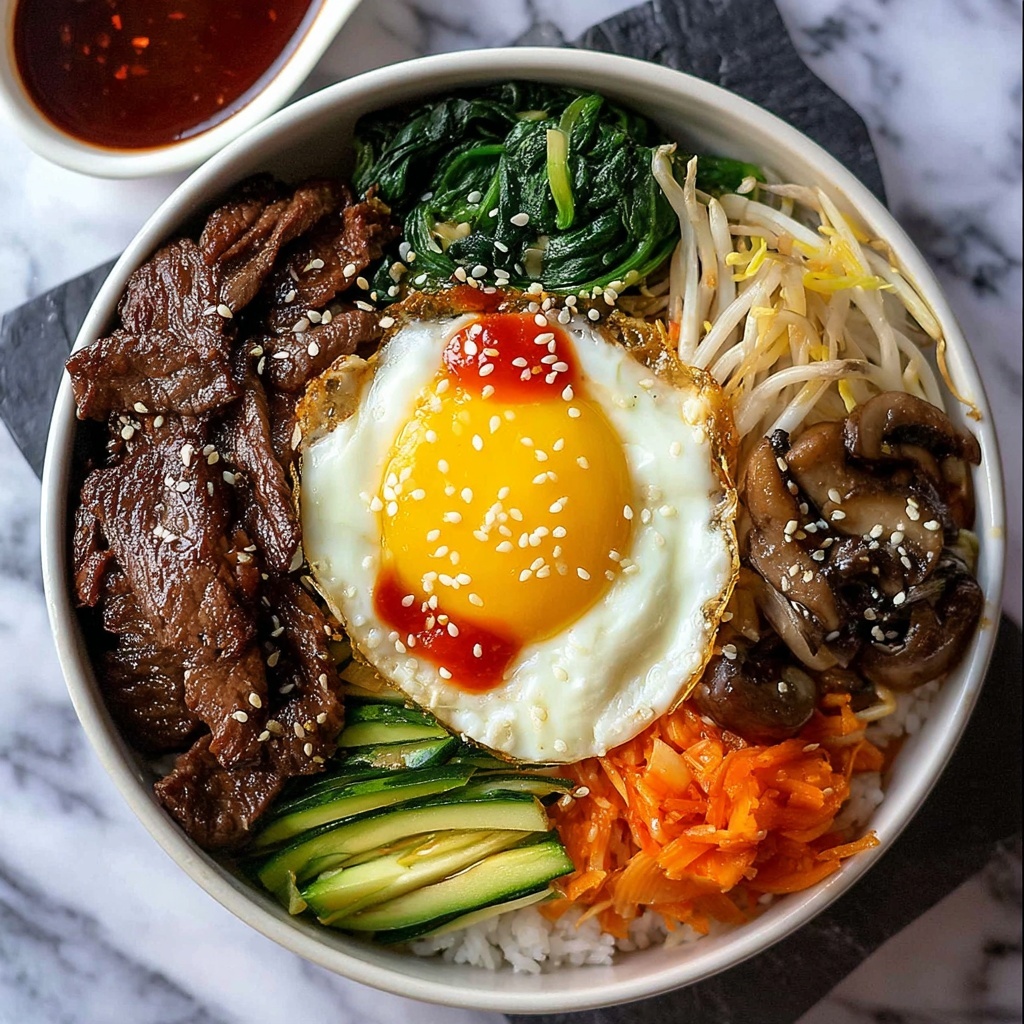
Sprinkle toasted sesame seeds over the assembled dish for an aromatic crunch. You can also add thinly sliced green onions or a few julienned cucumber strips to elevate freshness and add a pop of color that’s visually irresistible.
Side Dishes
Serve your Bibimbap with simple Korean side dishes like kimchi for tangy heat or a light seaweed soup to complement the bold flavors. These sides round out the meal, making it a well-balanced and satisfying dining experience.
Creative Ways to Present
Try assembling your Bibimbap in a warm stone bowl to achieve a crispy rice crust at the bottom, adding an exciting texture contrast. Alternatively, serve it in individual bowls arranged with colorful sections of vegetables and beef around the rice center for a stunning presentation that invites you to mix and enjoy.
Make Ahead and Storage
Storing Leftovers
Place leftover bibimbap components separately in airtight containers and refrigerate. This keeps the flavors fresh and prevents the textures from becoming soggy. The rice and cooked vegetables can be stored for up to three days.
Freezing
Because of the fresh vegetables and egg, freezing the complete bibimbap is not ideal. However, cooked beef and rice can be frozen separately for up to one month and reheated later to maintain good quality.
Reheating
Reheat rice and vegetables gently in a pan or microwave to preserve texture. Reheat the beef quickly to avoid toughness, and fry fresh eggs on the spot to top your bowl with that perfect velvety yolk before serving again.
FAQs
Can I use a different type of meat for Bibimbap Recipe?
Absolutely! While beef tenderloin or a thick steak is traditional, chicken, pork, or even tofu work wonderfully. Just adjust cooking times accordingly to ensure tenderness and flavor absorption.
Is there a vegetarian version of Bibimbap Recipe?
Yes, you can skip the beef and add extra mushrooms, tofu, or tempeh. The variety of vegetables provides plenty of flavor and texture, and the gochujang sauce remains the star for that authentic kick.
How spicy is the gochujang sauce in the Bibimbap Recipe?
Gochujang has a mild to moderate heat that’s balanced by sweetness and umami. You can always adjust the amount of gochujang to suit your spice tolerance, making the dish milder or bolder as you like.
What kind of rice should I use?
Short grain white rice is ideal for its sticky texture that holds the dish together well. If that’s unavailable, medium grain rice is a decent substitute, but avoid long grain varieties as they don’t offer the right chewiness.
Can I prepare Bibimbap ahead of time for a party?
Yes! Pre-cook and store all the components separately, then assemble the bowls just before serving. This keeps everything fresh and allows guests to enjoy the vibrant flavors and textures at their best.
Final Thoughts
This Bibimbap Recipe is one of those dishes that feels like a warm hug in a bowl, combining so many wonderful flavors and textures that everyone can appreciate. Once you try it, you might find yourself making it again and again, sharing it with friends and family because it’s simply that good. Don’t hesitate—grab the ingredients and start your Bibimbap adventure today!
Print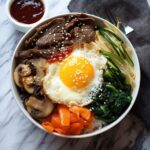
Bibimbap Recipe
- Prep Time: 40 minutes
- Cook Time: 30 minutes
- Total Time: 1 hour 10 minutes
- Yield: 4 servings
- Category: Main Course
- Method: Stovetop
- Cuisine: Korean
Description
Bibimbap is a classic Korean dish featuring a vibrant mix of cooked rice topped with assorted sautéed vegetables, marinated beef, and a perfectly fried egg. Served with a spicy and savory gochujang sauce, this recipe offers a harmonious balance of flavors and textures that is both comforting and nutritious. Ideal for a satisfying family meal, this bibimbap recipe includes detailed preparation of each component, making it approachable for cooks of all levels.
Ingredients
Rice and Egg
- 4 cups cooked white rice, preferably short grain
- 4 eggs
- 2 tsp toasted sesame seeds
Beef Marinade and Meat
- 250 g (8 oz) beef tenderloin or thick steak, very finely sliced
- 1/4 green apple, grated using box grater
- 3 garlic cloves, minced
- 1 tbsp light or all-purpose soy sauce
- 1 tbsp honey or brown sugar
- 2 tsp toasted sesame oil
Vegetables
- 2 large carrots, cut into 5 x 0.5 cm (2 x 1/5 inch) batons
- 2 large zucchinis, cut into 5 x 0.5 cm (2 x 1/5 inch) batons
- 1 bunch spinach, cut into 5 cm (2 inch) lengths
- 8 large dried shiitake mushrooms
- 4 cups bean sprouts
Seasonings and Sauces for Vegetables
- 2 tsp minced garlic (about 3 cloves)
- 8 tsp vegetable oil, separated
- 1/2 tsp salt
- 1.5 tsp light or all-purpose soy sauce
- 1/4 tsp fish sauce (or substitute soy sauce)
- 1/4 tsp white sugar
- Toasted sesame oil for drizzling
Gochujang Sauce
- 4 tbsp gochujang paste
- 2 tbsp mirin
- 2 tbsp rice vinegar
- 1.5 tsp light or all-purpose soy sauce
- 3 tsp white sugar
- 1 garlic clove, finely grated
- 2.5 tsp toasted sesame oil
Instructions
- Soak and Prepare Mushrooms: Begin by soaking the dried shiitake mushrooms in warm water until they soften, approximately 20 minutes. Once rehydrated, drain and slice them thinly. This step ensures the mushrooms are tender and ready for cooking.
- Prepare Vegetables and Bean Sprouts: Wash and cut the carrots and zucchinis into batons as specified. Blanch the spinach in boiling water briefly until wilted, then drain and cut into 5 cm lengths. Similarly, blanch the bean sprouts in salted boiling water for about 1-2 minutes, then drain thoroughly. These steps create perfectly tender vegetables with vibrant color and texture.
- Cook Vegetables Separately: Heat vegetable oil in a skillet over medium heat. Stir-fry the carrot batons until just tender, then remove and set aside. Repeat the process for the zucchini batons, spinach, mushrooms, and bean sprouts, seasoning each with minced garlic, soy sauce, salt, fish sauce (or soy sauce substitute), and a pinch of sugar as you go. Drizzle lightly with toasted sesame oil for added flavor. Cooking the vegetables separately preserves their unique tastes and textures.
- Marinate and Cook Beef: In a bowl, combine the grated green apple, minced garlic, soy sauce, honey, and toasted sesame oil to create the marinade. Add the finely sliced beef and toss to coat thoroughly. Let it marinate for at least 15 minutes to absorb the flavors. Then, quickly stir-fry the beef in a hot pan with a bit of vegetable oil just until cooked through and browned, about 2-3 minutes. Avoid overcooking to keep the beef tender.
- Fry Eggs and Assemble Bibimbap: Fry the eggs sunny-side up in a lightly oiled pan until the whites are set but yolks remain runny. Warm the cooked rice if necessary. To serve, place a generous portion of rice in each bowl, arrange the cooked vegetables and marinated beef artfully on top, and crown with a fried egg. Garnish with toasted sesame seeds. Prepare the gochujang sauce by mixing the paste with mirin, rice vinegar, soy sauce, sugar, grated garlic, and toasted sesame oil, and serve alongside or drizzle over the dish to taste.
Notes
- Note 1: Short grain rice is preferred for its sticky texture that holds the toppings well.
- Note 2: If beef tenderloin is unavailable, another tender cut or sirloin can be used thinly sliced.
- Note 3: The grated green apple adds natural sweetness and tenderizes the beef.
- Note 4: Use light soy sauce for a less intense saltiness; all-purpose soy sauce is an acceptable substitute.
- Note 5: Dried shiitake mushrooms contribute deep umami flavor; soaking is essential for softness.
- Note 6: Gochujang paste is a Korean chili paste that adds heat and depth; available at Asian grocery stores.
- Note 7: Mirin is a sweet rice wine used for seasoning; can substitute with a small amount of sugar if unavailable.
- Note 8: Rice vinegar provides mild acidity that balances the sauce flavors.
- Note 9: Toasted sesame oil adds a fragrant nutty aroma and should be used sparingly to enhance dishes.