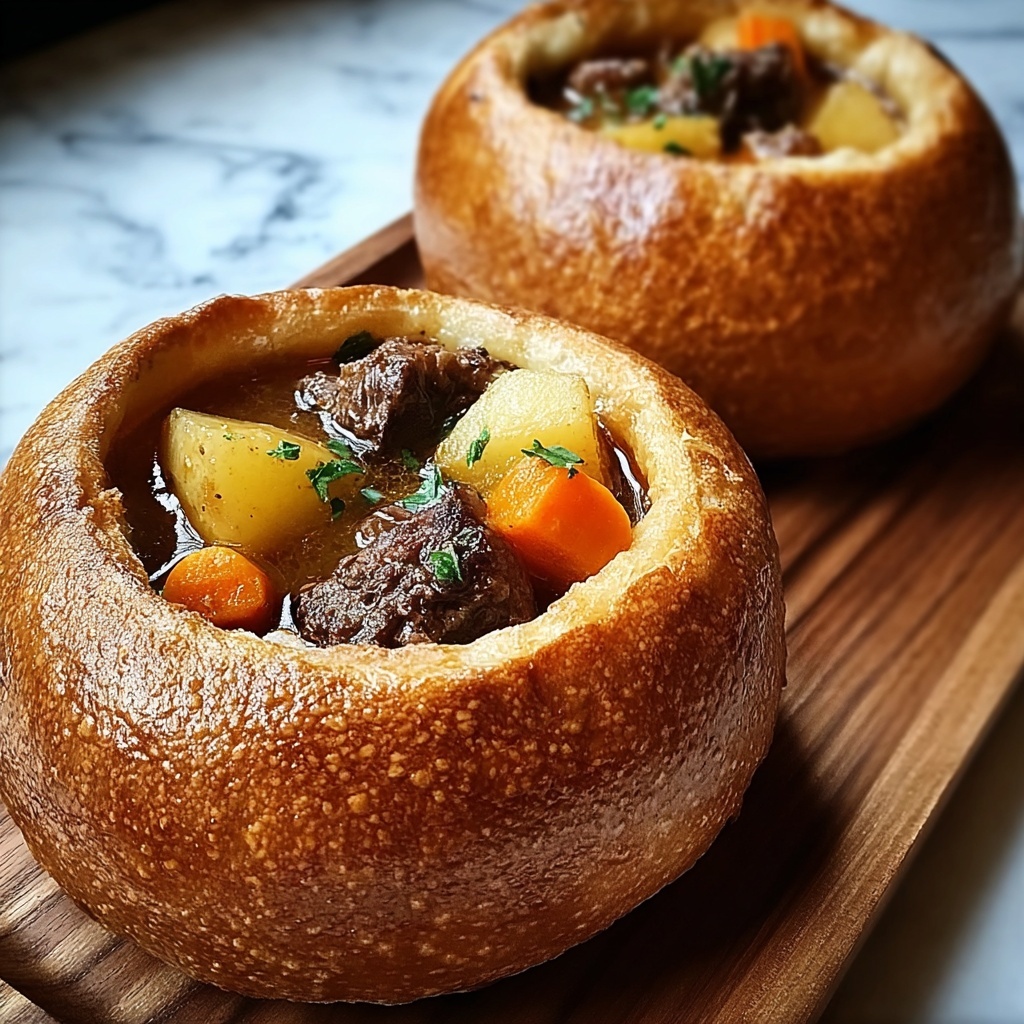
There is something incredibly comforting and satisfying about a hearty bowl of beef stew, especially when served in a rustic, edible bread bowl. This Beef Stew in Bread Bowls Recipe blends tender, slow-cooked beef and vibrant vegetables with a rich, savory broth, all encased in a crusty bread shell that soaks up every delicious drop. It’s the ultimate cozy meal that will warm your heart and fill your belly, perfect for sharing with family or friends on a chilly day or whenever you crave that perfect combination of flavors and textures.
Ingredients You’ll Need
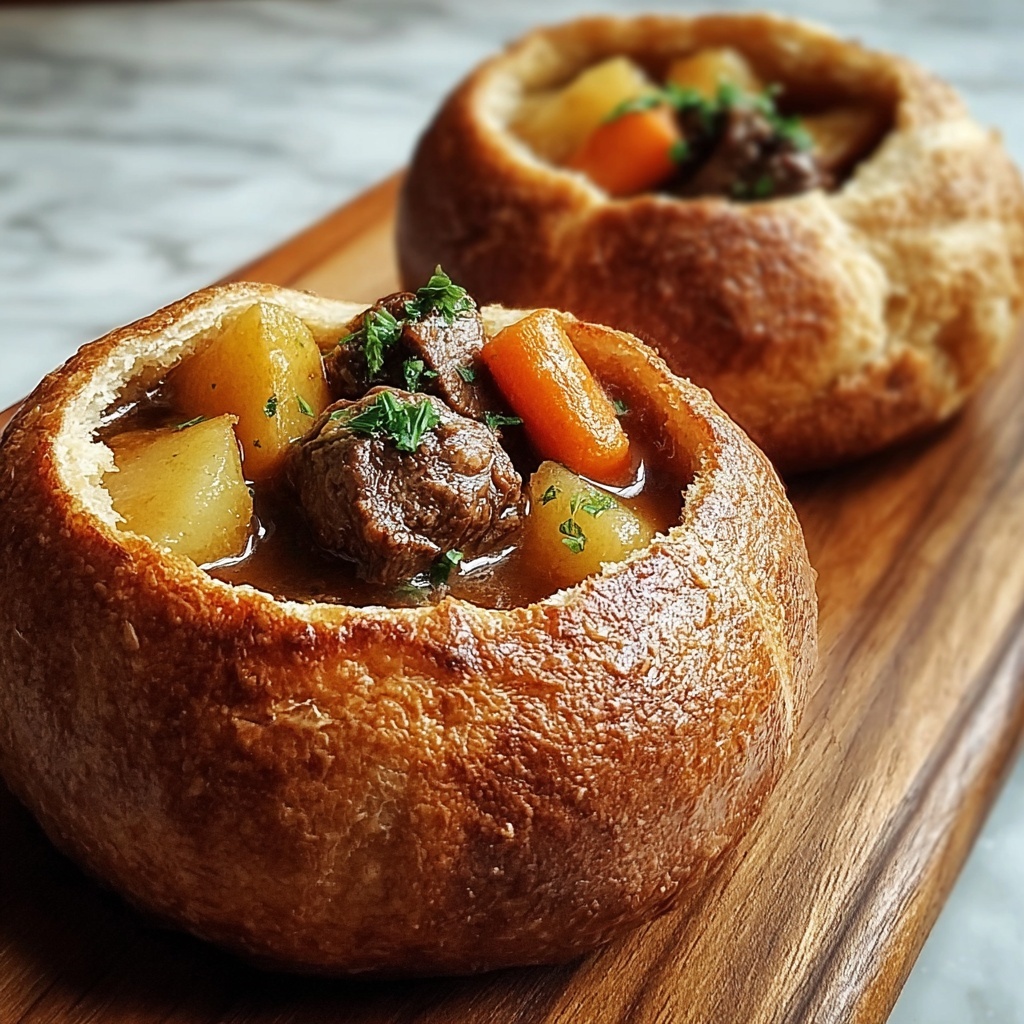
Getting started with this Beef Stew in Bread Bowls Recipe only requires a handful of ingredients that are both simple and essential. Each component plays a vital role in creating the depth of flavor, satisfying texture, and inviting color you’ll come to love in every bite.
- 1 lb beef stew meat, cubed: Choose a cut with good marbling for tender, flavorful beef after slow cooking.
- 2 tbsp olive oil: Perfect for searing the beef to develop that rich, savory crust.
- 1 medium onion, diced: Adds sweetness and aroma to the base of the stew.
- 2 cloves garlic, minced: Brings a subtle warmth and zing that complements the beef.
- 3 medium carrots, sliced: These provide natural sweetness and a vibrant pop of color.
- 2 medium potatoes, cubed: Hearty and satisfying, pockets of soft potato are a stew must-have.
- 4 cups beef broth: The flavorful liquid that creates the stew’s rich body.
- 1 cup red wine (optional): Adds complexity and depth to the broth, though you can skip it if needed.
- 1 bay leaf: Infuses a subtle, herbaceous note throughout the stew.
- 1 tsp dried thyme: Earthy and aromatic, thyme enhances the overall flavor profile.
- 1 tbsp Worcestershire sauce: Boosts umami and gives a gentle tangy kick.
- Crusty bread loaves for bowls: The star vessel that holds your stew and adds texture and flavor.
How to Make Beef Stew in Bread Bowls Recipe
Step 1: Sear the Beef
Start by heating the olive oil in a large pot over medium-high heat. Add the cubed beef stew meat and let it brown on all sides, about 5 to 7 minutes. This step is crucial because browning seals in the juices and creates those deep, caramelized flavors that give your stew its hearty foundation.
Step 2: Cook Onions and Garlic
Once your beef is beautifully browned, toss in the diced onions and minced garlic. Cook and stir until the onions turn translucent and fragrant, about 3 to 4 minutes. This softens them and releases their natural sweetness, which balances the stew perfectly.
Step 3: Add Vegetables
Next, add in the sliced carrots and cubed potatoes. These vegetables not only make the dish more colorful but they absorb the stew’s flavors while providing body and texture that’s so comforting to bite into.
Step 4: Pour in Liquids and Seasonings
Pour the beef broth and, if using, the red wine into the pot. Add the bay leaf, dried thyme, and Worcestershire sauce. Give everything a good stir to combine all those wonderful flavors into the broth, ensuring every ingredient is coated with seasoning.
Step 5: Simmer Until Tender
Raise the heat slightly to bring everything to a boil, then reduce the temperature to a gentle simmer. Let the stew cook uncovered for about 1.5 to 2 hours. This slow cooking process tenderizes the beef until it’s melt-in-your-mouth soft and helps the flavors meld beautifully into a rich, hearty stew.
Step 6: Prepare Bread Bowls
While your stew is simmering away, it’s the perfect time to hollow out your bread loaves. Use round crusty bread loaves and carefully cut out the center, leaving a sturdy shell thick enough to hold the stew without leaking. This edible bowl adds that extra wow factor to your meal!
Step 7: Serve
Before serving, remove the bay leaf from the stew. Ladle the piping hot beef stew into each prepared bread bowl and get ready to enjoy an unforgettable meal that’s as pleasing to the eyes as it is to your taste buds.
How to Serve Beef Stew in Bread Bowls Recipe
Garnishes
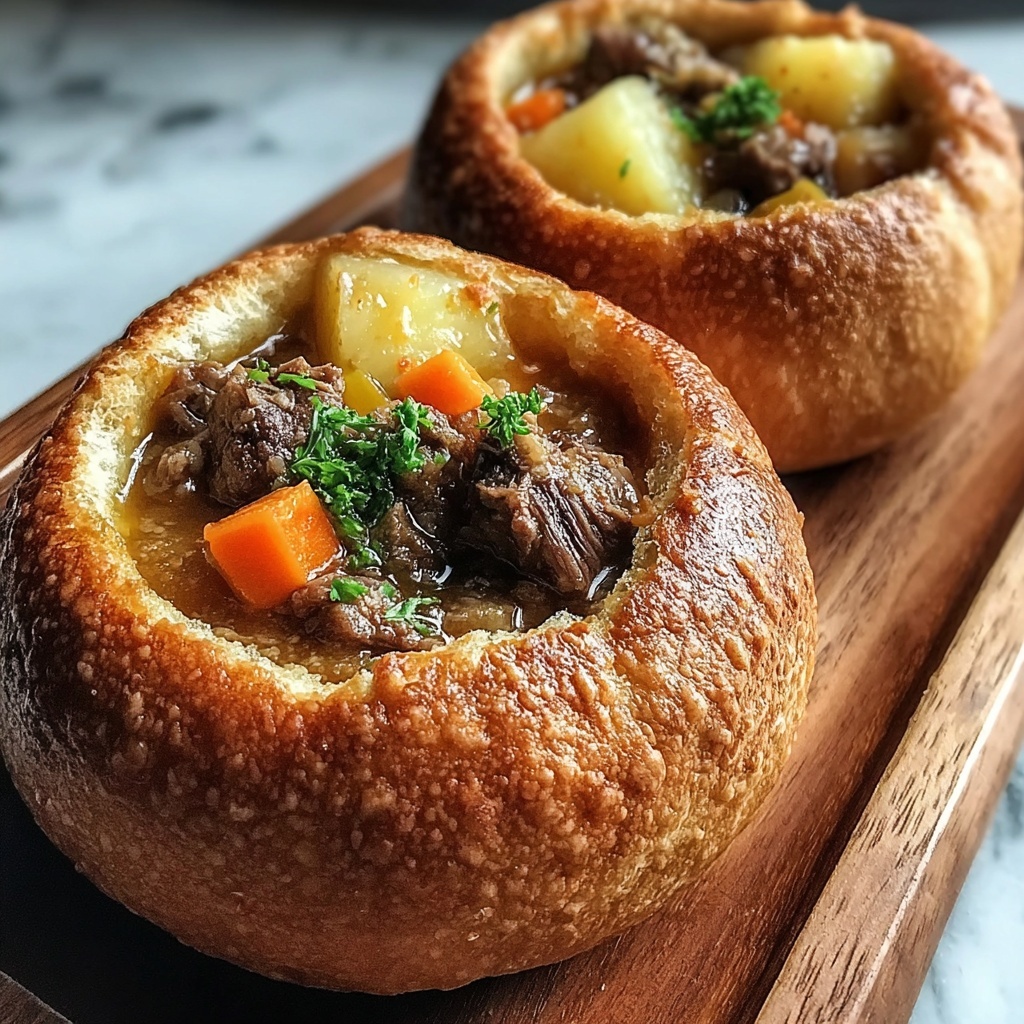
Adding a sprinkle of fresh chopped parsley or a few thyme leaves on top brightens the dish visually and adds a hint of fresh herbal notes that complement the stew’s richness. You can also include a dollop of sour cream or a sprinkle of shredded cheese if you want to add creaminess and extra depth.
Side Dishes
Although the bread bowl is a meal on its own, pairing it with a crisp green salad or a simple side of steamed green beans adds a refreshing contrast. These lighter sides offer a nice balance to the hearty stew and keep your meal feeling well-rounded and satisfying.
Creative Ways to Present
For a festive touch, you can shape smaller rolls into mini bread bowls for appetizers or kid-friendly portions. Another fun idea is to use sourdough or rye bread to add a tangy twist. Serving with a rustic wooden board and some colorful veggies on the side creates a comforting, charming presentation that will impress your guests every time.
Make Ahead and Storage
Storing Leftovers
If you have leftover beef stew, transfer it to an airtight container and store it in the refrigerator for up to 3 days. It makes for a fantastic next-day meal where the flavors deepen even further. Just keep the bread bowls separate to maintain their texture.
Freezing
Beef stew freezes wonderfully. Let it cool completely, then portion it into freezer-safe containers or bags. You can freeze it for up to 3 months. When you’re ready to eat, thaw the stew overnight in the fridge for best results—avoid freezing bread bowls as they won’t hold up well.
Reheating
Gently reheat your stew on the stove over low to medium heat, stirring occasionally until warmed through. For microwave reheating, cover loosely and heat in short intervals to prevent drying out. When ready to serve, ladle into freshly hollowed bread bowls for the full experience.
FAQs
Can I use other types of meat for this Beef Stew in Bread Bowls Recipe?
Absolutely! While beef stew meat is classic, you could try lamb or even diced pork for a different twist. Just keep in mind cooking times may vary slightly based on the meat’s tenderness.
Is red wine necessary in the stew?
Red wine adds a lovely depth and complexity, but it’s optional. If you prefer not to use alcohol, simply increase the beef broth by one cup or use grape juice with a splash of vinegar as a substitute for similar richness.
What kind of bread is best for the bread bowls?
A sturdy, crusty loaf such as sourdough or a round country-style bread is perfect. It needs to be thick enough to hold the stew without becoming soggy too quickly but still soft enough to enjoy eating along with the stew.
Can I prepare the stew ahead of time and assemble the bread bowls later?
Yes! The stew actually tastes better after resting as flavors meld beautifully. Prepare your stew a day ahead and gently reheat before filling freshly hollowed bread bowls for best results.
How can I make this recipe vegetarian?
Swap the beef for hearty mushrooms or lentils and use vegetable broth instead of beef broth. Adding extra herbs and a splash of soy sauce or miso paste can help create that deep umami flavor that makes this recipe so comforting.
Final Thoughts
This Beef Stew in Bread Bowls Recipe is more than just a meal—it’s an experience full of warmth, flavor, and heartiness. Whether you’re cooking for a cozy night in or looking to impress guests with a rustic presentation, this recipe delivers every time. I can’t wait for you to try it, enjoy the rich flavors, and savor the fun of devouring your stew right out of an edible bread bowl. Happy cooking!
Print
Beef Stew in Bread Bowls Recipe
- Prep Time: 15 minutes
- Cook Time: 2 hours
- Total Time: 2 hours 15 minutes
- Yield: 4 servings
- Category: Main Course
- Method: Stovetop
- Cuisine: American
Description
Hearty and comforting beef stew simmered to tender perfection and served in crusty bread bowls, making it a delightful meal that’s both satisfying and visually appealing. This classic stew features tender beef, carrots, potatoes, and aromatic herbs cooked slowly in a rich beef broth with optional red wine for depth of flavor.
Ingredients
Stew Ingredients
- 1 lb beef stew meat, cubed
- 2 tbsp olive oil
- 1 medium onion, diced
- 2 cloves garlic, minced
- 3 medium carrots, sliced
- 2 medium potatoes, cubed
- 4 cups beef broth
- 1 cup red wine (optional)
- 1 bay leaf
- 1 tsp dried thyme
- 1 tbsp Worcestershire sauce
Bread Bowls
- 4 crusty bread loaves (round shape preferred for bowls)
Instructions
- Sear the Beef: Heat olive oil in a large pot over medium-high heat. Add the cubed beef and sear until browned on all sides, about 5 to 7 minutes. This step locks in flavor and develops a rich base for the stew.
- Sauté Aromatics: Add diced onion and minced garlic to the pot. Cook, stirring occasionally, until the onion becomes translucent, about 3 to 4 minutes. This softens the onion and enhances the stew’s aroma.
- Add Vegetables: Stir in the sliced carrots and cubed potatoes. These vegetables will cook until tender and absorb the stew’s rich flavors.
- Combine Liquids and Seasonings: Pour in beef broth and, if using, the red wine. Add the bay leaf, dried thyme, and Worcestershire sauce. Stir everything together to blend the flavors evenly.
- Simmer the Stew: Bring the mixture to a boil, then lower the heat and let it simmer uncovered for 1.5 to 2 hours. This long simmering time allows the beef to become tender and the flavors to fully develop.
- Prepare Bread Bowls: While the stew simmers, hollow out the center of the round crusty bread loaves carefully to create edible bowls without breaking the crust.
- Serve: Remove the bay leaf from the stew. Ladle the hot, hearty beef stew into the prepared bread bowls and serve immediately for a rustic and satisfying meal.
Notes
- For a thicker stew, you can mash some of the potatoes in the pot or add a slurry of cornstarch and water during the last 10 minutes of simmering.
- Use good quality beef broth for a richer soup base or make your own for optimal flavor.
- The red wine is optional but adds a deeper flavor; substitute with additional beef broth if preferred.
- Crusty sourdough or French bread works best for the bread bowls to hold the stew without becoming soggy too quickly.
- Ensure the bread bowls are hollowed out completely but maintain a sturdy base to avoid leaks.