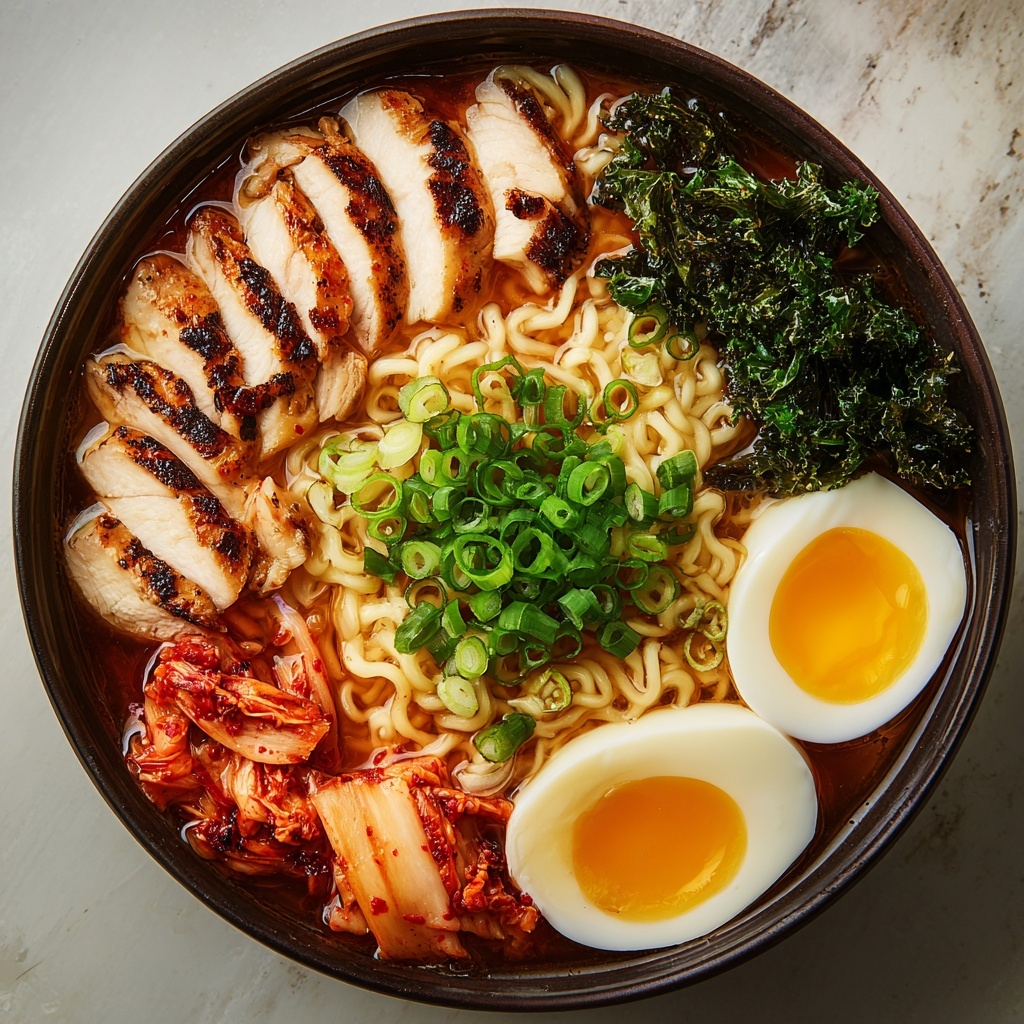
Nothing hits the spot quite like a warm bowl of Korean Ramen with Spicy Gochujang Broth and Soft-Boiled Eggs Recipe. This dish perfectly balances fiery, savory, and comforting flavors that wrap you in a cozy hug from the very first spoonful. The rich, spicy broth loaded with complex Korean seasonings, tender shredded chicken, and those silky soft-boiled eggs create a culinary experience that feels both indulgent and homey. Whether you’re craving a quick weeknight dinner or an impressive meal for friends, this recipe is a standout easy-to-make classic that never disappoints.
Ingredients You’ll Need
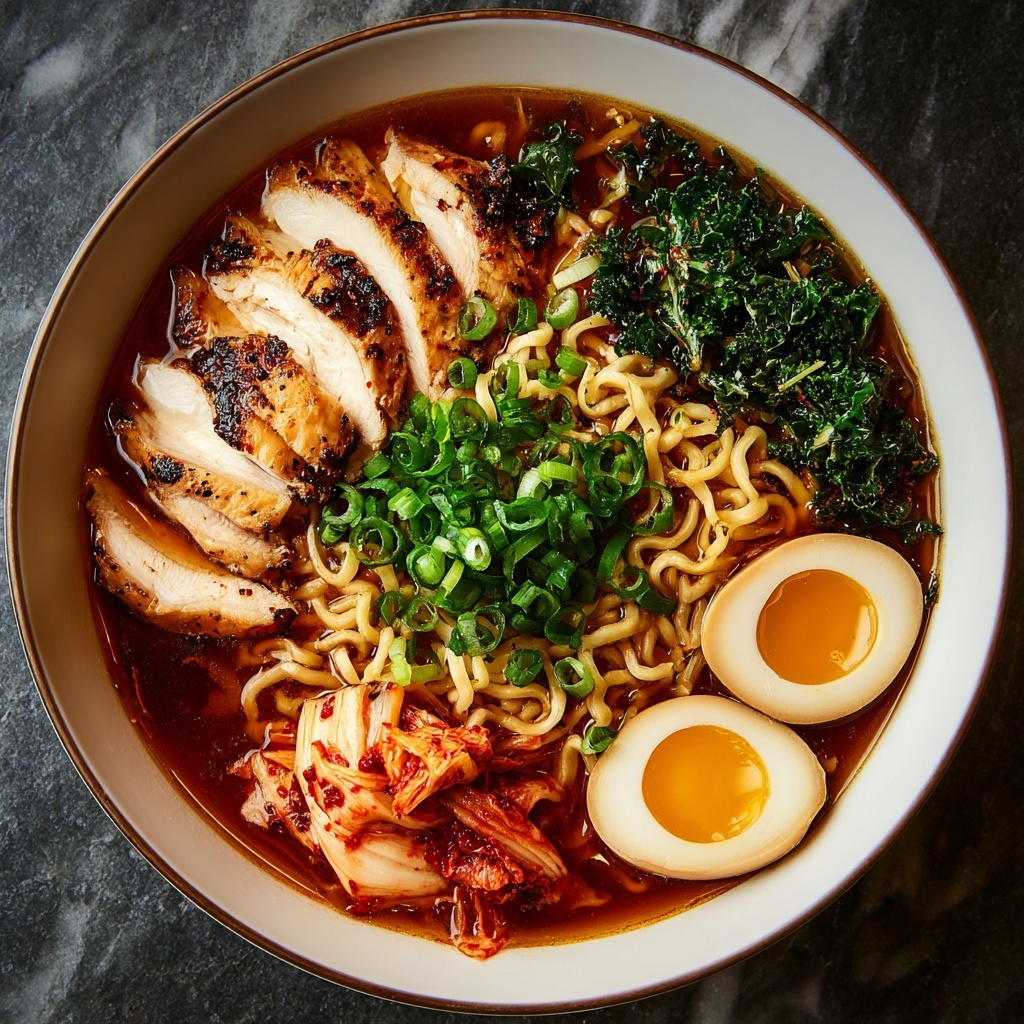
This recipe celebrates simplicity in its ingredients, each playing a vital role in building layers of flavor, texture, and color. From the bold heat of gochujang to the creamy umami of miso, these essentials come together effortlessly to create a deep, nuanced broth, while fresh garnishes add brightness and crunch.
- 4 cups chicken stock: The comforting base that infuses the broth with rich, savory depth.
- 4 tsp gochujang (Korean chili paste): Brings signature spicy-sweet heat and complexity.
- 1 tsp doenjang (Korean soybean paste, optional): Adds earthy umami for a well-rounded flavor.
- 2 tsp shiro miso (white miso): Provides gentle saltiness and a creamy undertone.
- 1 tsp coarse gochugaru (Korean chili flakes): For a textured kick of chili heat and color.
- 1 tsp fish sauce: Introduces savory depth and a subtle oceanic tang.
- 4 skinless chicken thighs: Tender protein that absorbs all the spicy goodness as it simmers.
- 4–5 oz Japanese ramen noodles (non-instant): Classic chewy noodles that hold up beautifully in broth.
- 2 large eggs: Soft-boiled to creamy perfection, enriching each slurp.
- Green onions, enoki mushrooms, kimchi (for garnish): Fresh, crunchy, and tangy accents that brighten the bowl.
How to Make Korean Ramen with Spicy Gochujang Broth and Soft-Boiled Eggs Recipe
Step 1: Make the Broth
Start by combining the chicken stock with gochujang, doenjang, miso, gochugaru, fish sauce, and the chicken thighs in a pot. Bring everything to a lively boil, then reduce to a gentle simmer for 30 to 40 minutes. This slow cooking allows the chicken to tenderize fully and infuses the broth with a vibrant, spicy umami that is the heart of this Korean Ramen with Spicy Gochujang Broth and Soft-Boiled Eggs Recipe. Once cooked, remove the chicken and shred it finely, and if you prefer a silky stew, strain the broth to remove any solids.
Step 2: Cook the Eggs
Timing is everything when it comes to crafting perfect soft-boiled eggs. Boil your eggs for about 6 to 7 minutes, then transfer them to ice water to halt cooking and make peeling a breeze. The resulting creamy yolk is essential for that luscious mouthfeel that contrasts wonderfully with the spicy broth and chewy noodles.
Step 3: Cook the Noodles
In a separate pot, cook the ramen noodles according to their package instructions, usually just a few minutes until tender but still with a bite. Drain and set aside, ready to soak up that vibrant broth.
Step 4: Assemble the Ramen
Divide the cooked noodles into warm bowls and top with the shredded chicken and your beautifully peeled soft-boiled eggs. Add any garnishes like green onions, enoki mushrooms, and kimchi to bring freshness and a variety of textures to each serving.
Step 5: Ladle the Broth
Finally, pour the hot, aromatic broth over your assembled noodles and toppings. Serve immediately while steaming, ensuring every spoonful bursts with the flavorful magic that makes this Korean Ramen with Spicy Gochujang Broth and Soft-Boiled Eggs Recipe so addictive.
How to Serve Korean Ramen with Spicy Gochujang Broth and Soft-Boiled Eggs Recipe
Garnishes
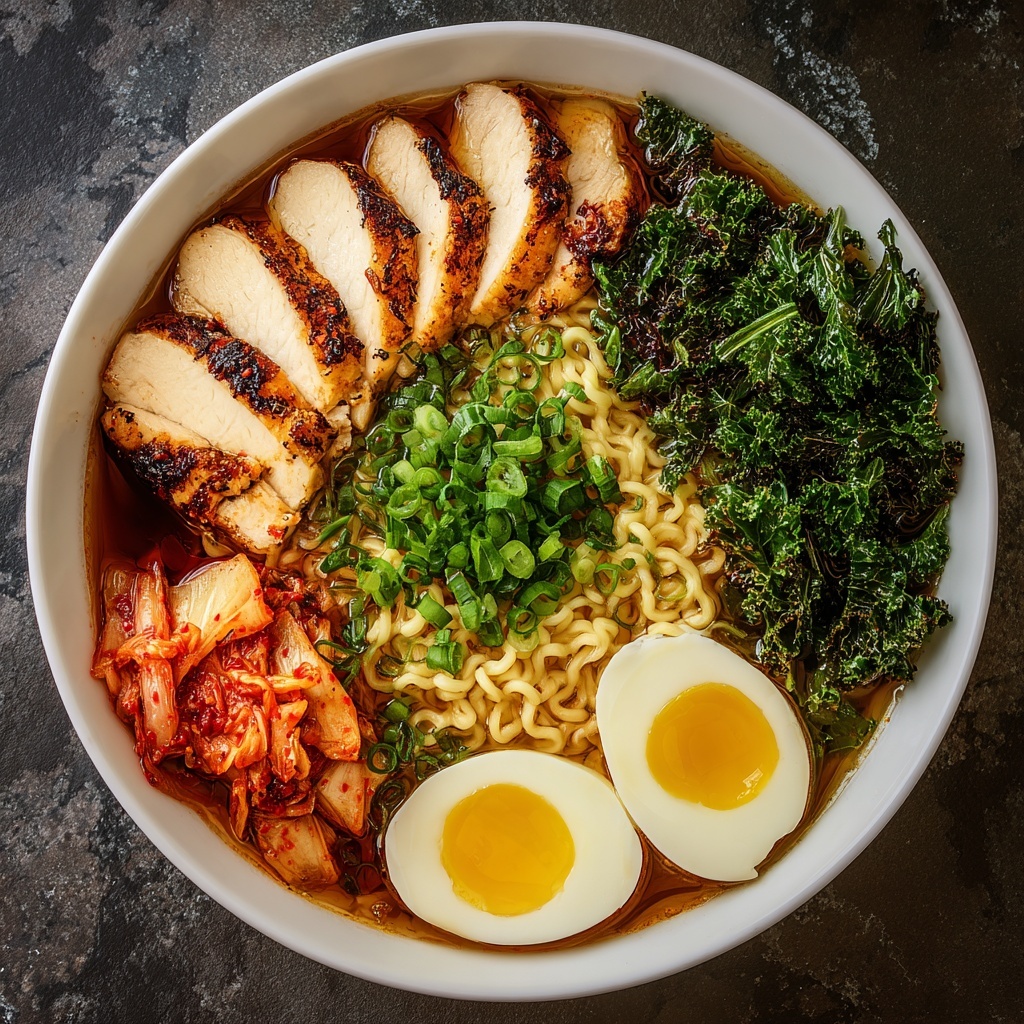
Fresh garnishes elevate this dish from delicious to unforgettable. Think crisp green onions sliced thin for a mild bite, earthy enoki mushrooms to add delicate texture, and vibrant kimchi for tangy crunch that balances the spicy broth brilliantly.
Side Dishes
Pair your ramen with classic Korean sides like pickled radish, steamed dumplings, or a simple cucumber salad dressed with sesame oil and vinegar. These bright sides add layers of flavor that complement the rich soup perfectly.
Creative Ways to Present
Get playful by offering a customizable ramen bar where guests can choose their favorite toppings like seaweed strips, toasted sesame seeds, or spicy chili oil. Presenting the soft-boiled eggs halved with yolks exposed adds a visually stunning and mouthwatering touch.
Make Ahead and Storage
Storing Leftovers
You can store leftover broth and shredded chicken separately in airtight containers in the refrigerator for up to 3 days. Keep the noodles and eggs separate to avoid sogginess and maintain freshness.
Freezing
The broth freezes beautifully, so freeze in portions if you want to enjoy this Korean Ramen with Spicy Gochujang Broth and Soft-Boiled Eggs Recipe on a busy day. Just thaw overnight in the fridge and reheat gently on the stove.
Reheating
When reheating, warm the broth and chicken slowly to keep flavors vibrant. Boil fresh noodles if the original ones became soft, and prepare fresh soft-boiled eggs for the best texture and taste.
FAQs
Can I use different protein instead of chicken thighs?
Absolutely! While chicken thighs offer richness and tenderness, you can also use pork belly, beef slices, or tofu depending on your preference. Just adjust cooking times accordingly.
What if I don’t have gochujang or doenjang?
Gochujang is essential for the signature flavor, but you can substitute it with a mix of chili paste and miso if needed. Doenjang adds extra earthiness but is optional, so don’t worry if you can’t find it.
How do I get the soft-boiled eggs just right?
Timing is key: boil for 6 to 7 minutes and immediately cool in ice water. Peeling gently under running water helps avoid any broken whites.
Can I make this recipe vegan?
With a few swaps like vegetable broth, tofu instead of chicken, and omitting fish sauce, you can enjoy a vegan version that’s still rich and spicy.
Is kimchi necessary for this dish?
Kimchi is not mandatory but highly recommended. It adds a wonderful tangy crunch that contrasts with the spicy broth beautifully and enhances the overall experience.
Final Thoughts
This Korean Ramen with Spicy Gochujang Broth and Soft-Boiled Eggs Recipe is truly a soul-satisfying bowl of happiness that you’ll crave again and again. It’s the kind of meal that feels like a warm hug from a dear friend—spicy, comforting, and full of heart. Give this recipe a try, and you might just discover your new favorite go-to for cozy nights and tasty adventures in Korean flavors.
Print
Korean Ramen with Spicy Gochujang Broth and Soft-Boiled Eggs Recipe
- Prep Time: 15 minutes
- Cook Time: 40 minutes
- Total Time: 55 minutes
- Yield: 2-3 servings
- Category: Soup
- Method: Stovetop
- Cuisine: Korean
Description
This Korean Ramen recipe combines a flavorful homemade broth infused with traditional Korean ingredients like gochujang, doenjang, and gochugaru with tender chicken thighs, perfectly cooked ramen noodles, and soft-boiled eggs. Garnished with fresh green onions, enoki mushrooms, and kimchi, it offers a comforting, spicy, and deeply satisfying bowl of noodle soup that highlights authentic Korean flavors.
Ingredients
Broth Ingredients
- 4 cups chicken stock
- 4 tsp gochujang (Korean chili paste)
- 1 tsp doenjang (Korean soybean paste, optional)
- 2 tsp shiro miso (white miso)
- 1 tsp coarse gochugaru (Korean chili flakes)
- 1 tsp fish sauce
- 4 skinless chicken thighs
Noodles and Eggs
- 4–5 oz Japanese ramen noodles (non-instant)
- 2 large eggs
Garnishes
- Green onions, sliced
- Enoki mushrooms
- Kimchi
Instructions
- Make the Broth: In a large pot, combine chicken stock, gochujang, doenjang (if using), shiro miso, gochugaru, fish sauce, and the skinless chicken thighs. Bring the mixture to a boil over medium-high heat, then reduce to a gentle simmer. Let it simmer uncovered for 30 to 40 minutes until the chicken is cooked through and the flavors meld. Remove the chicken and shred it into bite-sized pieces using two forks. Strain the broth to remove solids if you prefer a clear soup base.
- Cook the Eggs: In a separate pot, bring water to a boil. Carefully add the eggs and soft-boil them for 6 to 7 minutes. After cooking, transfer the eggs to ice water to cool completely before peeling the shells off.
- Cook the Noodles: Cook the ramen noodles in boiling water according to the package instructions, usually 3 to 4 minutes. Drain the noodles well and set aside, making sure not to overcook them so they retain a firm texture.
- Assemble the Ramen: Divide the cooked noodles evenly into two or three serving bowls. Top each bowl with shredded chicken, a peeled soft-boiled egg (halved if desired), and garnish with sliced green onions, enoki mushrooms, and kimchi to taste.
- Ladle the Broth: Pour the hot strained Korean ramen broth over the noodles and toppings, filling each bowl. Serve immediately while hot, allowing the ingredients to mingle and infuse every bite with rich, savory Korean flavors.
Notes
- Doenjang is optional but adds a deep fermented soybean flavor that enhances the broth.
- Soft-boil the eggs carefully to achieve a creamy yolk; adjust timing slightly based on egg size.
- Garnishes like green onions, enoki mushrooms, and kimchi add freshness, texture, and extra umami.
- Straining the broth is optional depending on your texture preference but results in a cleaner soup.
- Use non-instant ramen noodles for best texture and authentic experience.